|
||
TransformerDataEditorA paper entitled “Computing the T-Equivalent Zero-Sequence Impedances of Y-Y-Δ and Auto-Y-Δ Transformers from Test Data”, was presented in UGC 2024. It explained how the typical four zero-sequence impedances of a three-phase three-winding transformer in the presence of a delta winding can be used in CDEGS applications. These methods are now available in TDE (only for HIFREQ) as highlighted below. 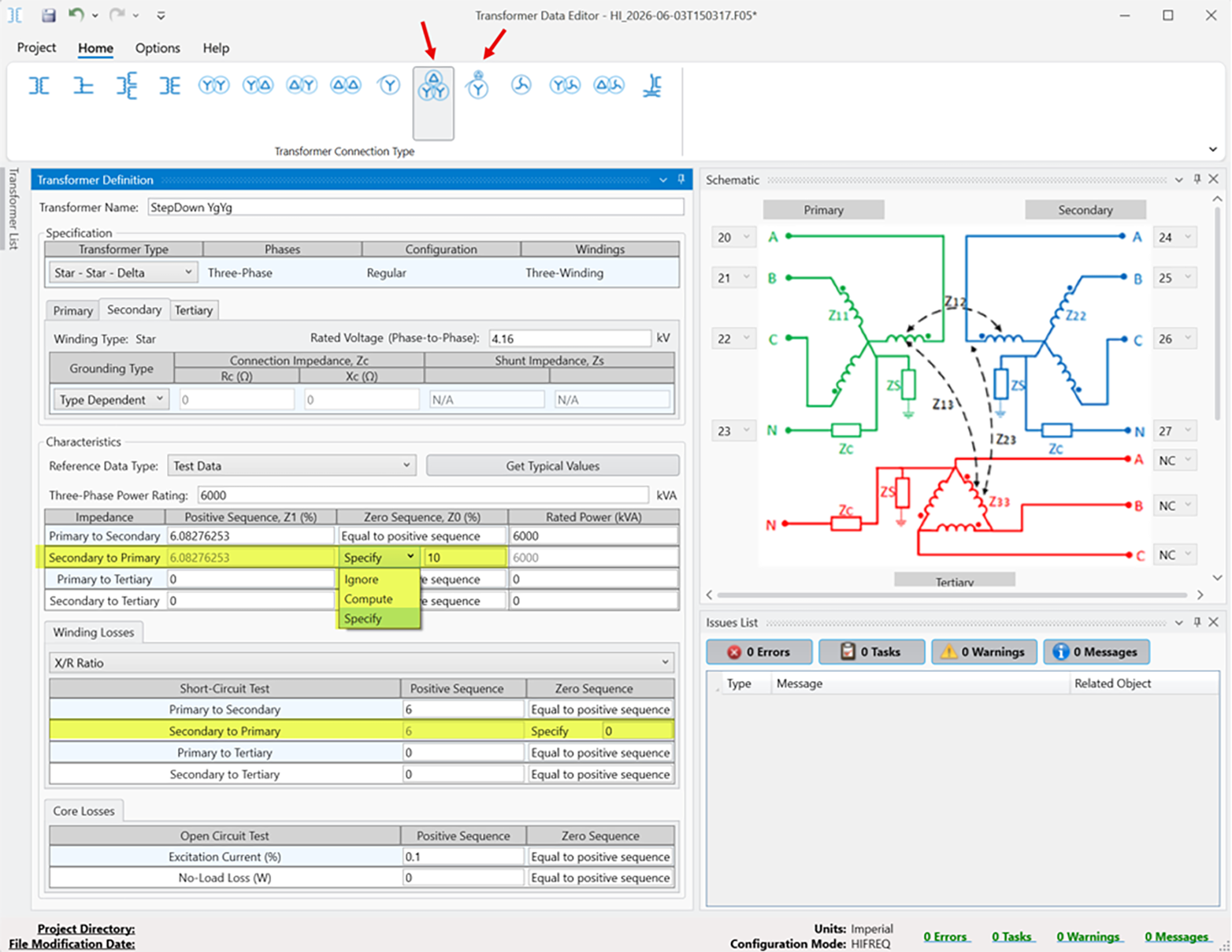
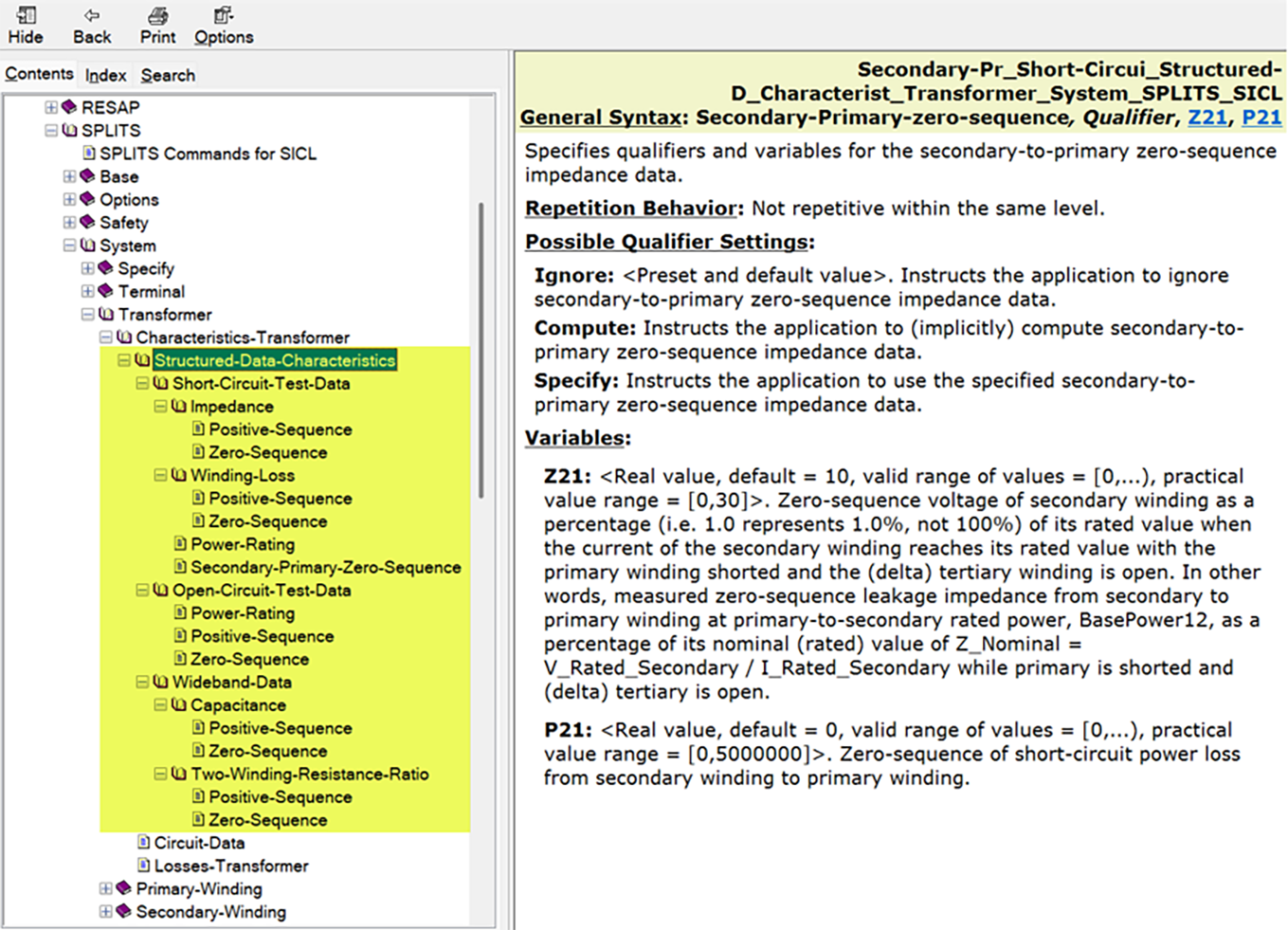
In particular, if the second option (Compute) is selected, the method described in Section 2.1.2 of the UGC 2024 paper is used. If the third option (Specify) is selected, the method described in Section 2.1.1 of the article is used. The first option (Ignore) means that the three zero-sequence short-circuit impedances correspond to measurements in the absence of the delta winding as was classically assumed (i.e., ignoring the presence of the delta winding). For SPLITS, this feature is not currently implemented but the impact of the delta winding can be taken into account by manual calculations. This is discussed in the Online Help where the simplified solution based on equation (22) of the UGC 2024 article is described. Obviously, the other methods of the paper can also be used, if desired. Another improvement made in TDE is the introduction of a new command called “Structured-Data-Characteristics”. It facilitates the new features in TDE (such as Expanded High Frequency Parameters and Secondary to Primary Zero Sequence Impedance) while also being better organized (or structured) compared to its predecessor “Test-Data” qualifier in the “Characteristics-Transformer” command. More information about it can be found in Command Help as seen below. 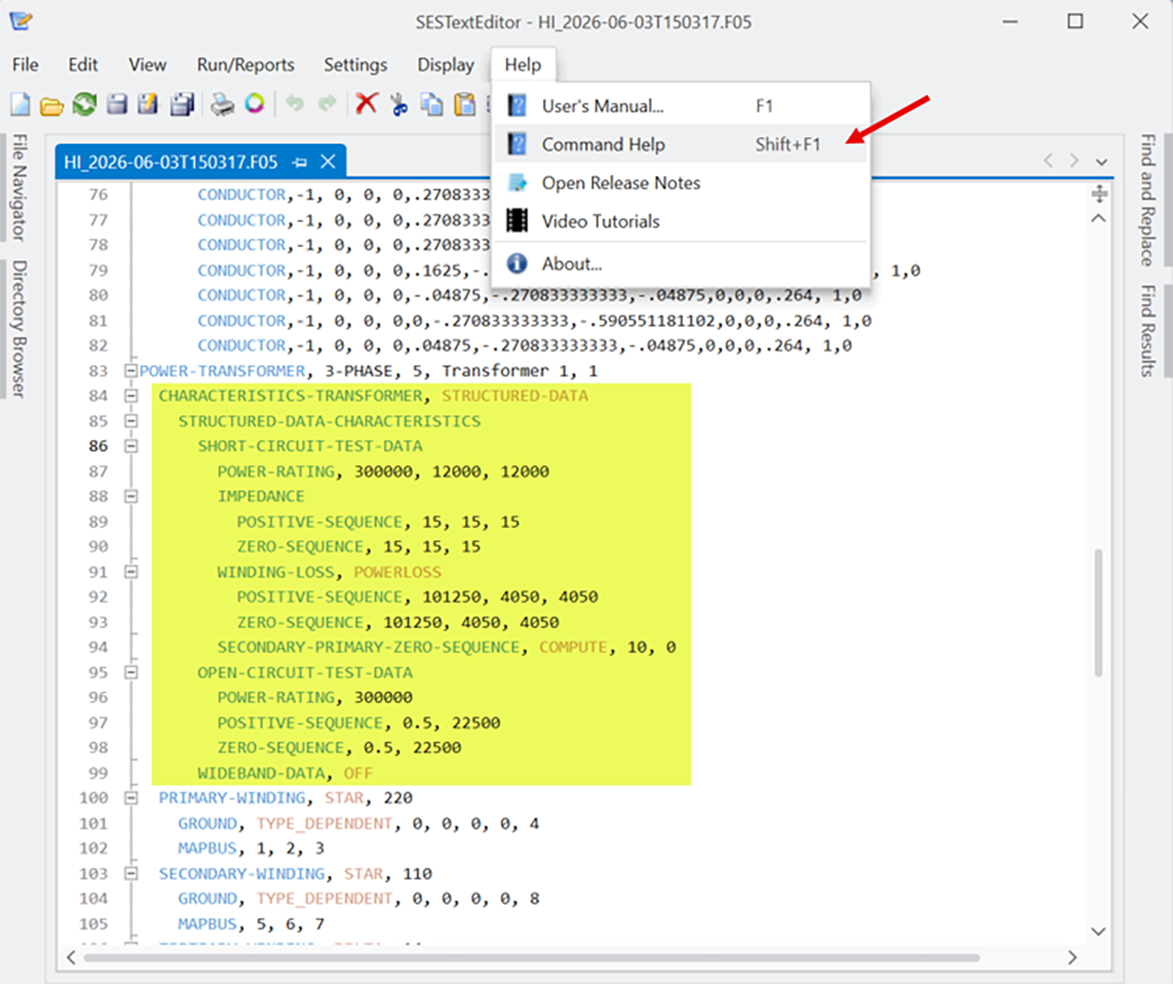
|
||
|
||
|
SES & technologies ltd. 3055 Blvd. des Oiseaux, Laval, Quebec, Canada, H7L 6E8 +1 (450) 622-5000 info@sestech.com ©2026 SafEngServices & technologies ltd. |