SESShield-2D - IEC 62305 Update and NFPA 780
Risk Assessment
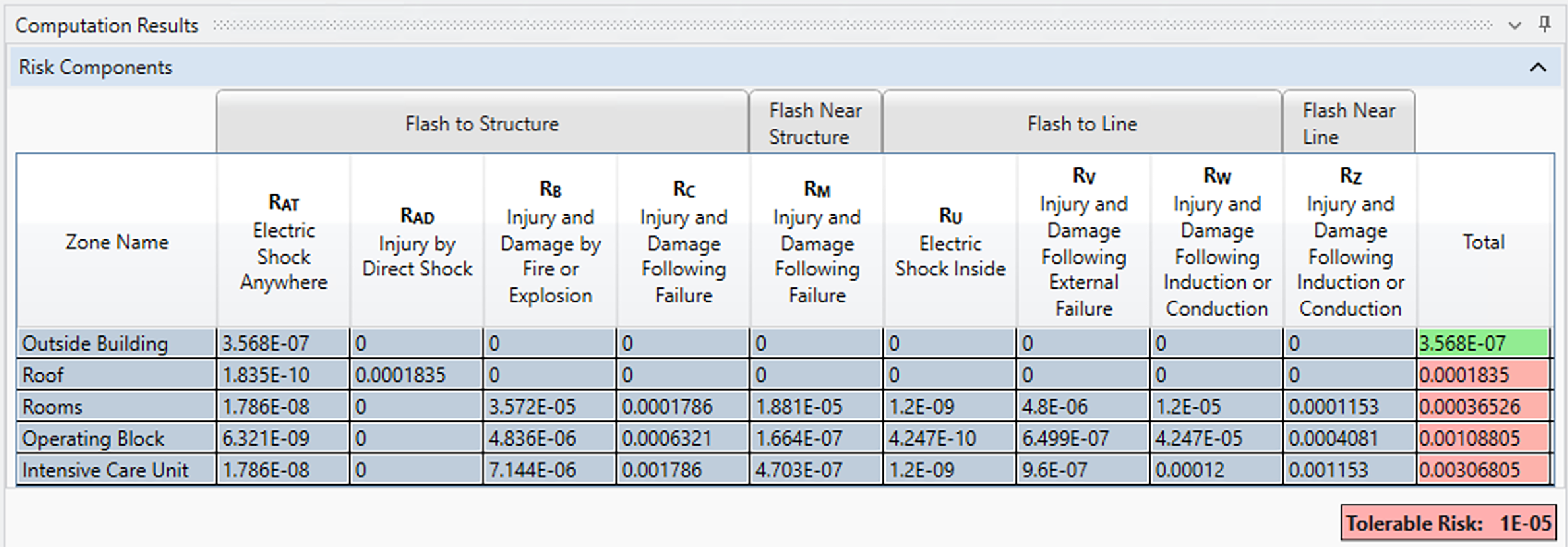
SESShield-2D is now compliant with the recently published IEC 62305-2:2024 standard, the third edition of this standard, replacing IEC 62305-2:2010, the second edition. The four separate risks outlined in the 2nd edition of the IEC 62305-2 standard have been replaced with a single total risk R. The necessary new variables have been introduced in the interface, including PTWS, which represents the probability that a thunderstorm is not detected, the probability that a flash to the structure will cause dangerous sparking PS, the equipment exposure time te, the exposure to a direct strike PO, and the soil resistivity. Other inputs have been moved to increase definition flexibility, such as the specification of internal spatial shields to the Zone rather than Structure definition, and the internal wiring shielding and coordinated SPD system now being specific not only to a service but also to each zone. The types of loss have not only been updated but now allow custom values.
The Computation results panel shows the new risk components and a color-coded total risk value for each zone.
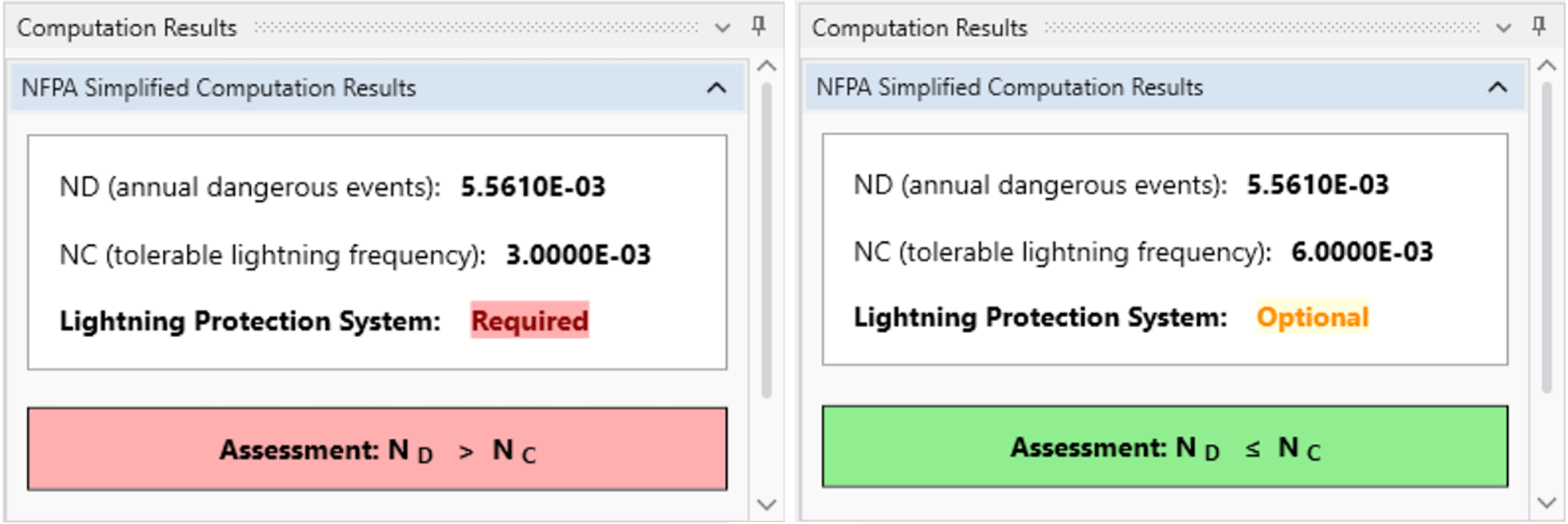
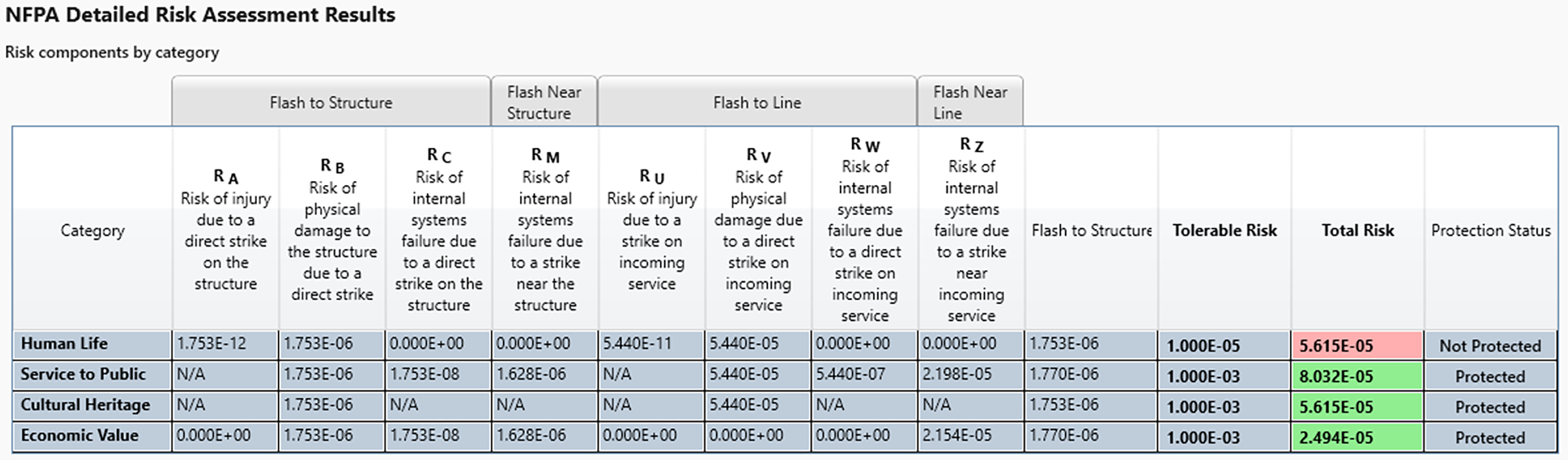
An entirely new risk assessment component following the NFPA 780 Annex L lightning risk assessment procedure is now available. Annex L provides two calculation methods: a simplified, quick-look assessment and a more detailed assessment. The simplified method is intended for rapid screening and is based on a comparison between the annual threat of occurrence, ND, and the tolerable lightning frequency, NC. The detailed method follows a more complete risk formulation, in which the sources of lightning damage, the types of damage, the probabilities of damage, and the resulting consequences are evaluated more explicitly.
A major change for both the NFPA 780 and IEC 62305-2 based risk assessments is the use of Ground Strike Point Density rather than Ground Flash Density in all dangerous-event calculations. This accounts for multiple strike points from a single lightning flash and generally increases calculated risk levels.
See the article entitled “Advances in SESShield-2D - IEC 62305 Update and NFPA 780 Risk Assessment” in these Proceedings for further details.
|